Best temples in Indonesia
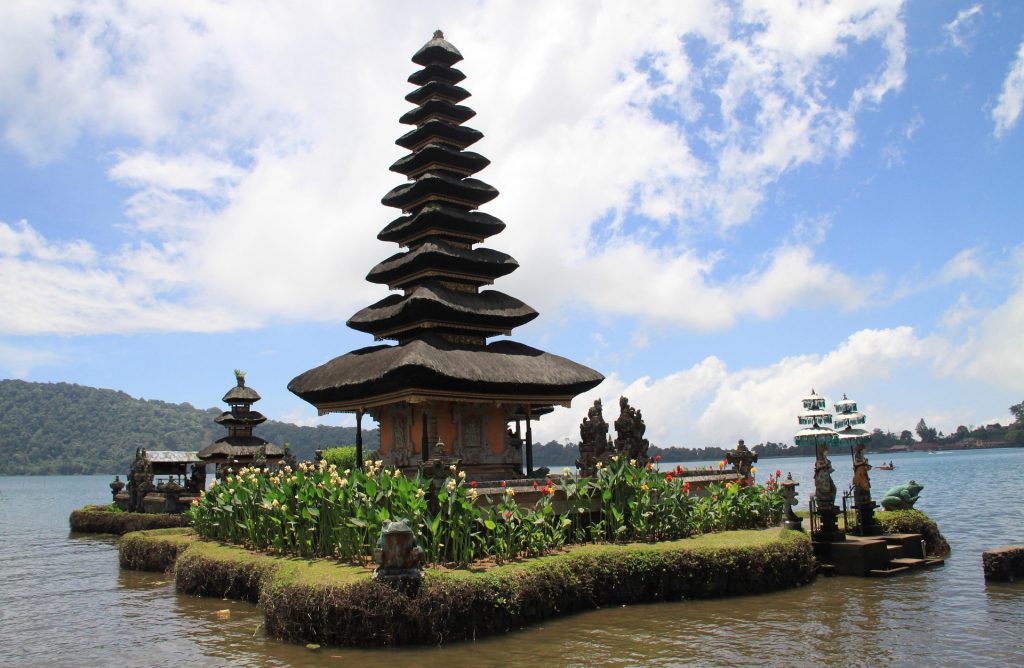
Indonesia isn’t just Bali — the best temples in Indonesia range from massive Buddhist and Hindu complexes in Java to quieter, truly ancient temples in Indonesia in parts of Sumatra, plus “living” Balinese temples still used today. Let’s look at a practical shortlist with simple logistics, how much time to plan, and when to visit for the best atmosphere.
Temple Picks in 60 Seconds
Most famous in the country:
- Borobudur (Borobudur), Central Java — Indonesia’s main Buddhist symbol, a monumental complex.
- Prambanan (Prambanan), Yogyakarta area — a large Hindu temple compound.
- Uluwatu (Uluwatu Temple), Bali — a cliffside temple with an ocean view (and strict visiting rules).
Most atmospheric:
- Uluwatu (Bali) — sunset, ocean, dramatic cliffs.
- Ulun Danu Beratan (Ulun Danu Beratan), Bali (Bedugul) — the “temple on the water” by the lake.
- Muaro Jambi (Muaro Jambi), Sumatra — a huge area of ancient temples and ruins in greenery; it feels like an “expedition,” not a theme-park site.
Oldest:
- Muaro Jambi (Sumatra) — a complex dated across a wide range, roughly 7th-13th centuries.
- Muara Takus (Muara Takus), Sumatra (Riau) — a Buddhist complex often dated to the 11th-12th centuries.
- Borobudur (Java) — an ancient Buddhist monument (we’ll cover it in detail in the temple card).
Best if you’re short on time:
Region: Yogyakarta and surroundings (Central Java)
- Prambanan + Borobudur (and if you still have energy, one smaller site on the way / nearby). This is the most “dense” region for big impressions with minimal transfers.
Best in the capital / near the capital:
In Jakarta itself, people usually don’t come looking for a temple “must-see” on the level of Borobudur, so the logic is simple: if you fly into Jakarta, treat temples as a separate side trip to Java (via Yogyakarta) or go for Sumatra if you want “non-classic” ancient sites. (We’ll include logistics in the cards below so you don’t have to guess.)
Best “outside the tourist classics”:
- Muara Takus (Sumatra) — a rare route for most tourists, but genuinely old and significant.
- Sukuh (Candi Sukuh), Java — an unusual mountain Hindu temple from the 15th century (a different aesthetic and atmosphere).
How many days do you need for temples on a first trip?
Minimum: 3-4 days (if you only do Java around Yogyakarta). Comfortable: 7-10 days if you want to add Bali and one “non-typical” ancient complex.
12 temples that are truly worth including on your first trip
Central Java & the Yogyakarta area
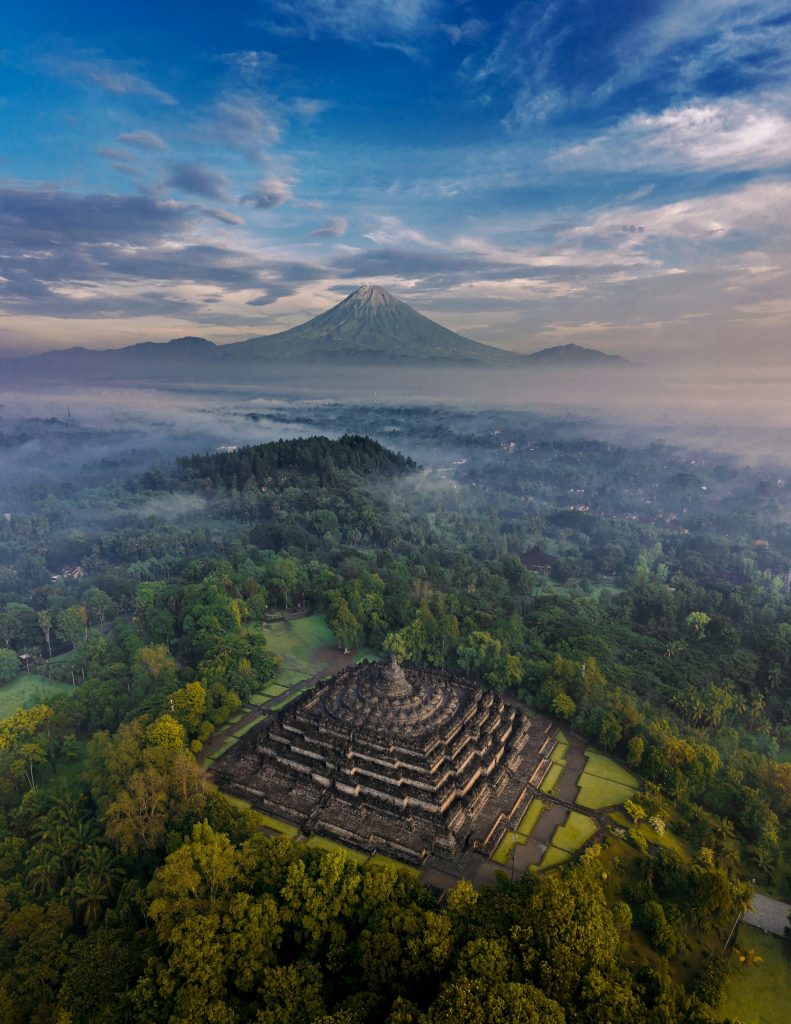
1) Borobudur (Borobudur)
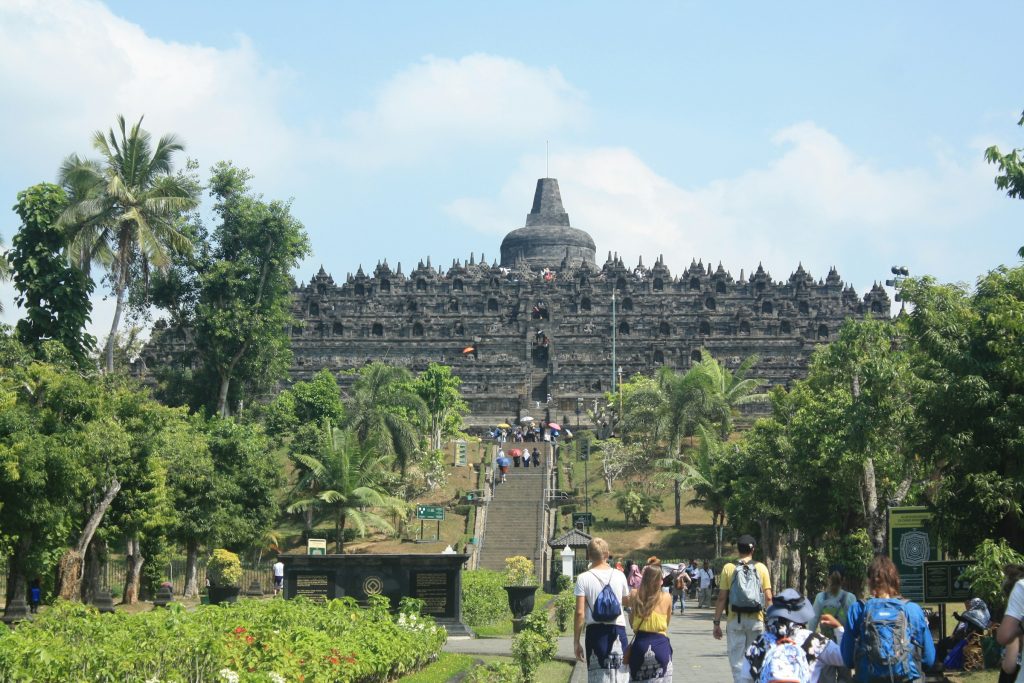
Borobudur is the country’s main Buddhist landmark and one of those rare places that still feels massive even after you’ve seen a hundred photos. It’s not just a temple, but an entire “architectural mountain” of terraces and reliefs. It’s located in Central Java near Magelang; most people visit as a day trip from Yogyakarta (private driver/tour/transfer is usually the easiest, most straightforward logistics). The best time is early morning on weekdays: it’s cooler, and you have a better chance of walking it without heavy crowds.
- How much time to plan: half a day
- Tickets/donation: paid (often there are separate ticket options / access zones)
2) Prambanan (Prambanan)
Prambanan is Indonesia’s largest Hindu temple complex, and it’s often paired with Borobudur — because in meaning and visuals it’s a completely different world. It’s in the Prambanan area between Yogyakarta and Solo, which makes it easy to visit from Yogyakarta without overnight stays or complicated transfers (taxi/private driver/tour). The best time is early morning on weekdays, before the main wave of tour buses arrives.
- How much time to plan: 1-2 hours
- Tickets/donation: paid
3) Ratu Boko (Ratu Boko)
Ratu Boko isn’t a classic “postcard temple.” It’s a historical complex with a strong atmosphere and wide views, and it works perfectly as an add-on to Prambanan on the same day. It’s close to the Prambanan zone, so the logic is simple: add it as a second stop if you have time and want “more than just a checkbox.” The best time is early morning on weekdays (the calmest for crowds); the light can be beautiful later in the day too, but that often coincides with peak visitor times.
- How much time to plan: 1-2 hours
- Tickets/donation: paid
4) Candi Sukuh (Candi Sukuh)
People love Sukuh because it doesn’t look like “classic Java” at all: it’s mountain-set, unusual in form and feeling, and it’s great if you want something odd and memorable rather than the standard tourist highlights. It’s in the mountains near Solo, so the easiest way is by car with a driver (public transport usually won’t save you here). Best time: early morning on weekdays, before the heat and before more visitors show up.
- How much time to plan: 1-2 hours
- Tickets/donation: paid (usually on site)
Bali
5) Uluwatu (Uluwatu Temple / Pura Luhur Uluwatu)
Uluwatu is one of Bali’s most recognizable temples: it sits on a high cliff, and the whole point is the ocean, the wind, and that dramatic edge of rock. It’s in South Bali, in the Pecatu area (Bukit Peninsula); it’s easiest to reach by taxi/scooter or with a driver, and many people combine it with beaches. Best time is early morning on weekdays if you want quiet, or closer to sunset if you want the strongest visuals (but sunset almost always means crowds).
- How much time to plan: 1-2 hours
- Tickets/donation: paid
6) Tanah Lot (Tanah Lot)
Tanah Lot is Bali’s “sea classic”: you go for the view and the mood — especially at sunset rather than for a long, detailed temple visit. It’s on the west coast in the Tabanan area, and it’s most convenient to visit by car/with a driver (without your own transport, the logistics can be annoying). Best time: early morning on weekdays for a calmer visit, or sunset for the biggest visual impact (knowing it will be busy).
- How much time to plan: 1-2 hours
- Tickets/donation: paid (prices can change — check the ticket booth/on-site info board)
7) Ulun Danu Beratan (Ulun Danu Beratan, Bedugul)
Ulun Danu Beratan is loved for the “temple on the water” look and the mountain lake setting — it’s one of Bali’s most photogenic scenes, especially with a little mist. It’s in Bedugul by Lake Beratan; most visitors come by car/with a driver as part of a central/north Bali route. Best time is early morning on weekdays: fewer people, and the mountain weather is usually more comfortable.
- How much time to plan: 1 hour
- Tickets/donation: paid
8) Tirta Empul (Tirta Empul / Pura Tirta Empul)
Tirta Empul is an important “living” place: it’s not only about looking around, but about seeing Bali’s ritual side (and if you enter the purification pools, the rules get extra strict). It’s in Tampaksiring near Ubud; getting there is easy by taxi/scooter or with a driver. Best time: early morning on weekdays, so you don’t end up in long lines or tight crowds near the springs.
- How much time to plan: 1-2 hours
- Tickets/donation: paid
9) Goa Gajah (Goa Gajah / Elephant Cave)
Goa Gajah is compact but dense: there’s the “Elephant Cave” itself, older elements, and a pleasant green area where you can walk without feeling rushed. It’s close to Ubud, which makes it one of the easiest stops logistically — you can swing by for a couple of hours between other plans. Best time is early morning on weekdays, because crowds feel immediate in a small space.
- How much time to plan: 1-1.5 hours
- Tickets/donation: paid
10) Taman Ayun (Taman Ayun, Mengwi)
Taman Ayun is a great pick if you want “beautiful architecture and calm” without extreme locations or Tanah Lot-level crowds: it’s neat, well-kept, and works even for people who don’t want to dive deep into religion. It’s in Mengwi, between Denpasar/areas like Canggu and the route toward Bedugul, so it often fits naturally as a stop on the way. Best time: early morning on weekdays.
- How much time to plan: 45-90 minutes
- Tickets/donation: paid
Sumatra (if you want truly “ancient temples in Indonesia” outside the tourist classics)
11) Muaro Jambi (Muaro Jambi)
Muaro Jambi isn’t a single temple — it’s a large archaeological zone of ancient Buddhist structures, and the vibe feels more like a quiet expedition than a heavily packaged tourist park. It’s in Jambi Province, near Jambi City; the usual approach is to base yourself in the city and go by car (so you control the timing and aren’t stuck with limited transport options). Best time is early morning on weekdays, because the area is big and the heat/humidity are easier in the morning.
- How much time to plan: half a day
- Tickets/donation: usually paid / symbolic ticket (confirmed on site)
12) Muara Takus (Muara Takus)
Muara Takus is valued for being rare and “not mainstream”: it’s an ancient Buddhist complex in Sumatra that people visit specifically for the feeling of seeing something outside the standard tourist set. It’s in Riau Province; most visits require a car (and sometimes more careful road planning than Bali/Java). Best time: early morning on weekdays, so you’re not traveling in peak heat and you keep a time buffer.
- How much time to plan: 1-2 hours (plus travel time)
- Tickets/donation: paid / donation (usually on site)
How to plan a temple trip without extra transfers
Here are two scenarios that most often work well for a first trip to Indonesia. The focus is on smart routing, where to set your bases, and how many transfers you’ll actually have — so your vacation doesn’t turn into a transport quest.
Option A: 3-4 days (if you’re in the country briefly or sticking to one region)
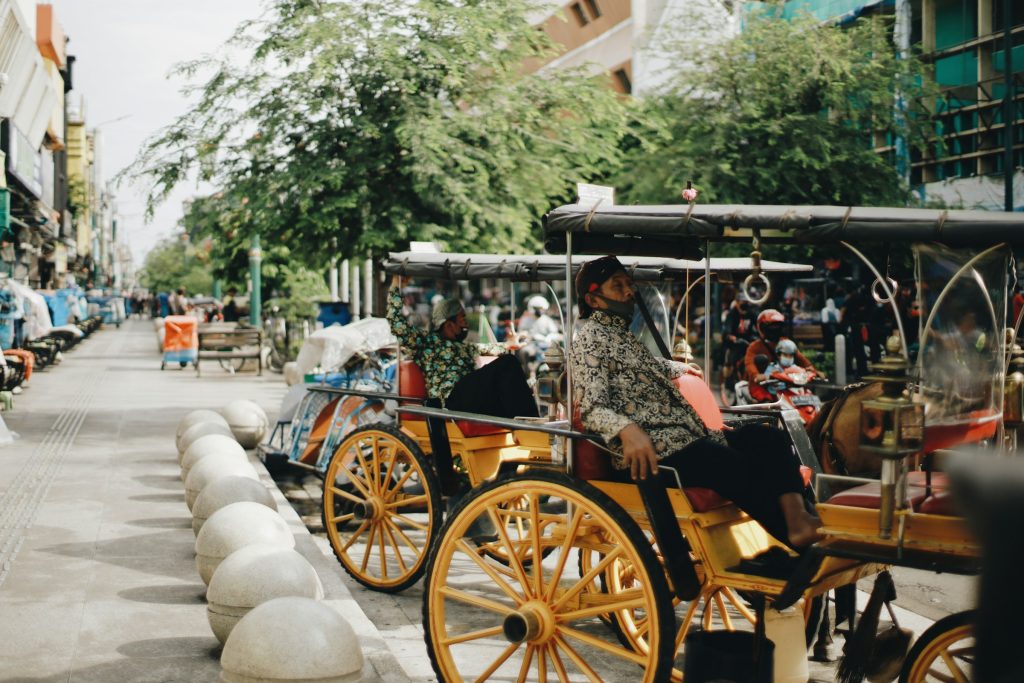
A1) The clearest choice: Yogyakarta + Java’s main temples
Regions: Yogyakarta → nearby area (Prambanan / Ratu Boko / Borobudur)
- Day 1: Arrive/check in in Yogyakarta, keep the evening light (no “big” temples — so you can wake up early the next day).
- Day 2: Prambanan in the morning → (if you have energy) Ratu Boko as an add-on the same day.
- Day 3: Borobudur at sunrise/early morning (ideally a weekday) → free time / return.
- Day 4 (optional): if you want something “not like everyone else,” head toward Solo for Candi Sukuh (a different vibe, with mountain atmosphere).
How many transfers + where to base yourself:
- One base: Yogyakarta (3-4 nights).
- Minimal transfers: basically just day trips out-and-back.
- Best transport format: private driver/tour, because it lets you control the morning timing and avoid crowds + complicated connections.
A2) If you’re already in Bali and short on time: “beautiful and easy”
Regions: South Bali → Central Bali (Bedugul) → Ubud area
- Day 1: Uluwatu (morning is calmer / sunset is more dramatic).
- Day 2: Taman Ayun as a quick stop → then Ulun Danu Beratan (Bedugul) as the main “lake temple” of the day.
- Day 3: Ubud zone: Goa Gajah + Tirta Empul (best right at opening).
- Day 4 (optional): Tanah Lot (either morning for fewer people, or sunset for the “wow” view).
How many transfers + where to base yourself:
- 1-2 bases: either one base (e.g., Ubud/central area) with day trips, or two bases (1-2 nights in the south + 1-2 nights in Ubud).
- Not many transfers, but in Bali the real factor is driving time — don’t try to cram “opposite ends of the island” into one day.
Option B: 7-10 days (the classic first-trip route)
The idea is simple: you do Java for the big “wow” scale, and Bali for atmosphere and easy logistics. Sumatra is only worth adding if you specifically want “ancient temples” outside the tourist classics and you’re OK with a more complicated journey.
B1) 7-8 days: Java (Yogyakarta) + Bali
Regions: Central Java (Yogyakarta + surroundings) → Bali (south/central)
- Days 1-3/4 (Java): base yourself in Yogyakarta → Prambanan → Ratu Boko (optional) → Borobudur (ideally an early-morning weekday slot).
- Fly/transfer to Bali (don’t schedule any “big” stops on this day).
- Days 5-7 (Bali): Uluwatu → Ulun Danu Beratan (+ Taman Ayun on the way) → Ubud area (Goa Gajah + Tirta Empul).
- Day 8 (if you have it): Tanah Lot — either “for sunset” or “for morning,” depending on your style.
How many transfers + where to base yourself:
- Bases: 1 base in Java (Yogyakarta) + 1-2 bases in Bali (south and/or Ubud).
- One key transfer: Java → Bali (flight). Everything else is day trips.
B2) 9-10 days: Java + Bali + “ancient Sumatra” (for those who want a non-classic set)
Regions: Central Java → Sumatra (Jambi/Riau — pick one) → Bali
- Days 1-4 (Java): Yogyakarta as your base + Borobudur/Prambanan/Ratu Boko, and if you want — Sukuh as a “non-standard” Java finale.
- Days 5-6 (Sumatra): choose one more complex ancient stop so you don’t spread yourself too thin:
- either Muaro Jambi (most logical via Jambi City),
- or Muara Takus (if you’re OK with a more road-heavy day).
- Days 7-10 (Bali): keep it calm and scenic — Uluwatu → Bedugul (Ulun Danu Beratan) → Ubud area (Tirta Empul/Goa Gajah) + a buffer day.
How many transfers + where to base yourself:
- Bases: Yogyakarta (Java) + one city-base in Sumatra + Bali (1-2 bases).
- More transfers: you add at least one extra flight (Java ↔ Sumatra or Sumatra ↔ Bali).
- This route is “for interest,” not “for simplicity.”
Etiquette and visiting rules for temples in Indonesia
In Indonesia, temples aren’t “photo backdrops” — they’re active religious places. The good news is you don’t need perfect knowledge of local traditions: follow a few simple rules and you’ll avoid awkward moments.
Dress code
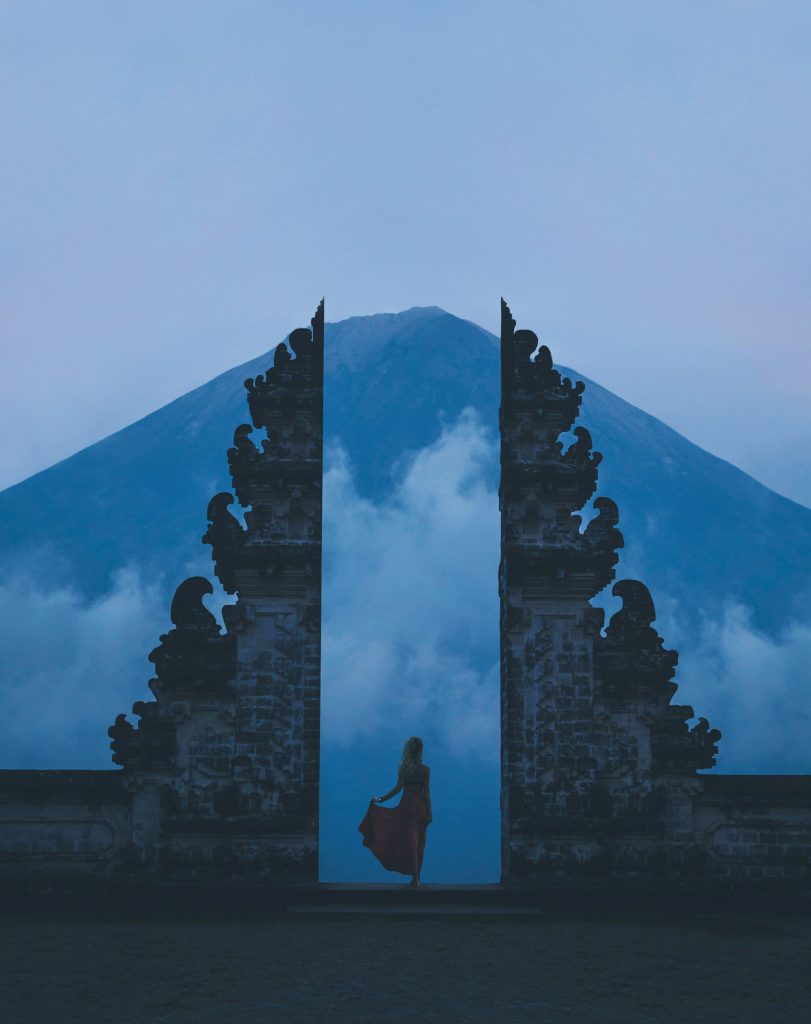
The basic rule: shoulders and knees should be covered.
- In Bali and in some temple complexes in Java, you’ll often be given a sarong and a sash at the entrance or asked to rent/borrow one — this is normal.
- If you’re wearing shorts or a tank top, it helps to have a simple “Plan B” with you: a light shirt/cover-up and a long skirt/trousers, or a large scarf that truly covers your knees.
- In rainy weather, don’t rely on very thin fabric: a wet sarong can turn see-through — go for something thicker or use layers.
How to behave inside and on temple grounds
It’s all about respect and keeping things calm:
- Lower your voice, slow down. Even if there are tourists around, prayers or ceremony preparations may be happening.
- Don’t block walkways or entrances, especially if you see people carrying offerings or wearing ceremonial clothing.
- Don’t touch sacred objects (altar areas, statues, offerings) — even if “no one is watching.”
- If you see a sign like “prayers only / worshippers only,” don’t argue — take another route; there’s usually an alternative visitor area.
Photo/video: where it’s usually OK — and where it’s better not to
The rule with cameras is simple: if you’re unsure, don’t shoot close-ups and don’t push in.
- On open courtyards and viewpoints, photos are usually fine.
- Inside sanctuaries or near prayer, offerings, or ceremonies, filming is often discouraged (and sometimes clearly prohibited by signs).
- Drones are a separate story: there may be restrictions near temples and in tourist zones, and it’s not something to launch “just to see,” especially around people and sacred areas.
- One practical thing: don’t climb onto reliefs, barriers, or “better rocks” for a shot — that’s exactly what quickly makes locals (and staff) tired of tourists.
If you’re visiting with kids: quick tips
- With children, plan short, clear visits: one major complex per day is usually the max — otherwise everyone gets tired and it turns into “let’s rush.”
- Give a simple rule: “Don’t touch offerings and don’t run near altars.” That’s often enough.
- Bring water and a light snack, but eat outside “sacred” zones; take trash with you until you find a bin (sounds obvious, but in the heat it really matters).
Practical tips: how to visit Indonesia’s temples without crowds, heat, or stress
Temples in Indonesia are easy to “ruin” not because of the place itself, but because of small things: you arrive at peak time, get hit by the heat, slip on wet steps and instead of good memories you just want to leave. Here’s what actually helps.
How to avoid crowds
The most effective strategy is to arrive right at opening time. At popular sites, the difference between the “first 30–60 minutes” and “two hours later” is immediate: more space, shorter lines, calmer photos.
The second simple lever is weekdays. Even in places that are busy all the time (Bali, the Yogyakarta area), weekday crowds tend to be noticeably more manageable.
And one more route hack: don’t schedule two top sights for the same “perfect sunset.” Either you pick one place for the best light — or you end up rushing and fighting crowds at both.
Weather and footwear: heat, rain, and the “suddenly” slippery staircase
In Indonesia, weather often matters more than your plan:
- Heat and humidity drain energy fast, especially at large complexes (like Borobudur or big archaeological zones in Sumatra). Morning isn’t just aesthetics — it’s energy management.
- Rain can start suddenly. After a shower, stone steps can become genuinely slippery, and older surfaces feel even trickier than they look in photos.
- The most useful shoes are grippy and secure (closed shoes, or at least proper soles), not smooth “one-time” flip-flops. In some areas you may need to remove footwear — bring socks you don’t mind getting dusty.
Accessibility: stairs, long walks, and pace
If you don’t enjoy “tourist cardio,” plan for reality:
- Ancient sites often have lots of steps and uneven surfaces. That’s normal, but if you have knee/back issues, it’s smarter to choose shorter stops and plan breaks.
- Large temple zones (especially in Sumatra) aren’t “15 minutes and done” — they’re a walk around a wide area. Check the map first and decide: do you want to cover everything, or pick 2–3 key sections?
- If you’re traveling with kids or older relatives, go for “fewer places, calmer visits,” not “everything at once.”
Common tourist “scams” near popular sites
No paranoia needed — just switch on a calm skepticism mode:
- “Mandatory guide / mandatory service.” If someone confidently says “you have to,” confirm at the ticket booth or the official entrance. In most places, the visit format is still your choice.
- Overpriced “right now” fees at parking lots or near entrances — especially if it feels unofficial. Head to the ticket counter and don’t pay middlemen in the heat of the moment.
- Overly pushy sellers near top spots (especially in Bali): remember one simple rule — you don’t owe anyone anything. A calm “no, thank you” and walking on usually solves it.
- “Best photo spot for money.” Sometimes it’s a legit paid viewpoint; sometimes it’s just an attempt to monetize an obvious location. Look for an official price list/sign, then decide for yourself.
What temple route actually works
If it’s your first time in Indonesia and you want temples that genuinely stay in your memory — without turning the trip into endless transfers — stick to a simple logic. The best “value for impressions” is the Yogyakarta area in Java: you can easily build a couple of days around Borobudur and Prambanan and get that real sense of scale — the kind that makes the word ancient in your search query actually meaningful. Bali is worth adding not because “you have to,” but because it’s comfortable and visually strong: a cliffside temple, a lake temple, a temple with purification rituals and all of it without complicated logistics if you spread your stops across the island smartly.
The biggest beginner mistake is trying to see “all the best temples in the country.” In Indonesia, that almost always means fatigue and chaos. A better plan is simple: pick one region as your base (Java or Bali), add 2-3 truly standout sites, and only then decide whether you want “ancient sites outside the classics” in Sumatra. And don’t forget the basics that make the trip smoother: mornings instead of peak hours, weekdays instead of weekends, proper shoes, and respect for local rules — because temples in Indonesia are still living places, even when tourists are everywhere.